EU Inc. Corporate Legal Form Overview by PKF Germany
This document provides an overview of the EU Inc. corporate legal form as presented by PKF Germany.
An automatic aggregator of EU Inc signals across all 27 member states. Primary sources, attributed throughout, filterable by country.
Browse all 27 countries, or jump to the live timeline.
National positions
Recent EU Inc developments
This document provides an overview of the EU Inc. corporate legal form as presented by PKF Germany.
Country-by-country tracker of EU Inc, the proposed 28th regime corporate framework. Status, readiness, signals, and primary sources for all 27 EU member states.
The European Commission is planning a uniform legal form across the EU known as EU Inc. SBS Legal explains the formation, potential benefits, and criticisms of this 28th regime.
The European Parliament's draft report on the EU Inc. framework introduces significant changes that could reshape how innovative companies operate across borders, particularly around employee participation rights and eligibility criteria. Rather than simply streamlining incorporation, the evolving proposal emphasizes balancing competitiveness with worker protections and corporate governance requirements.
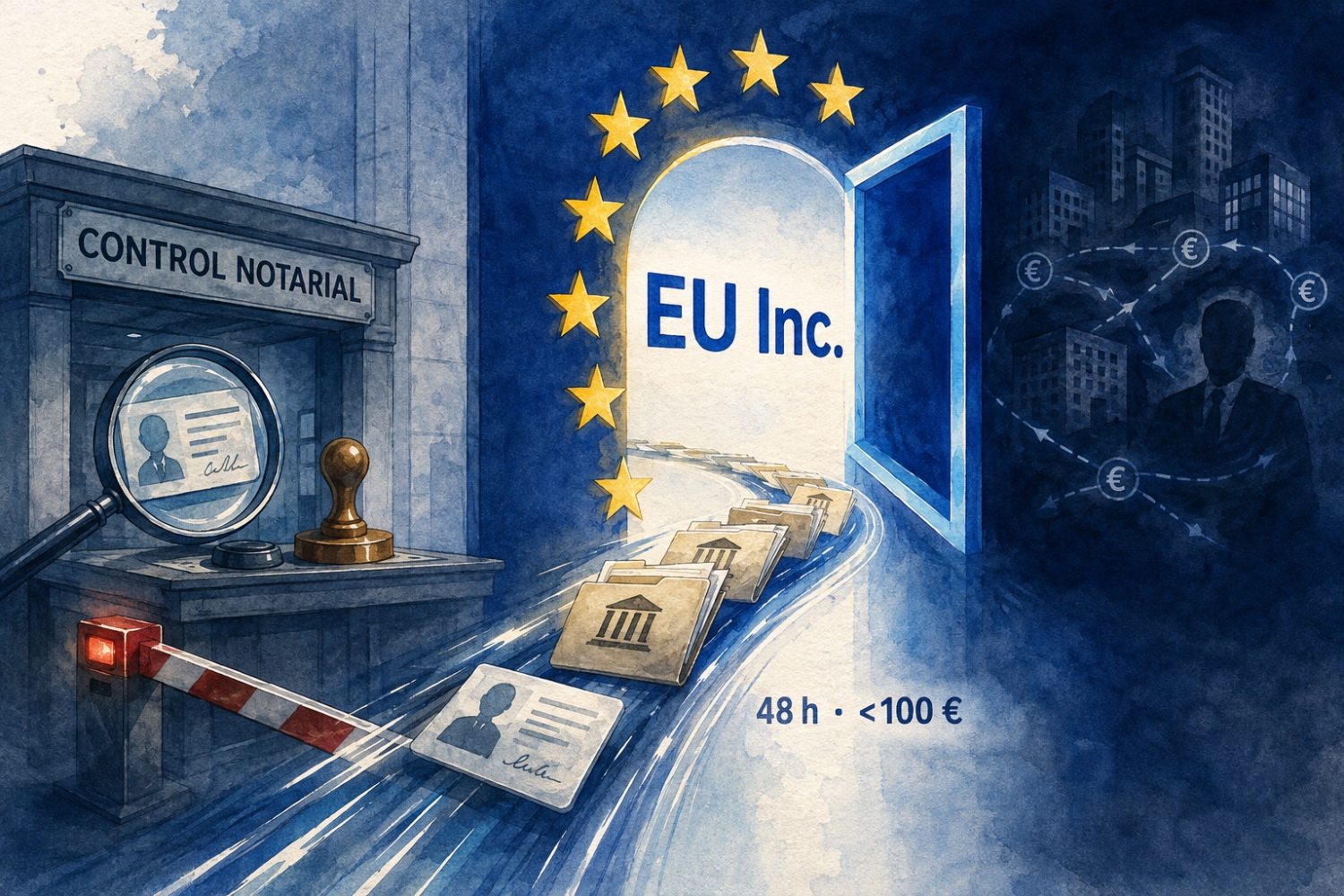
In March, Brussels introduced the EU Inc Regulation, which allows for the creation of a European company within 48 hours for less than 100 euros and without initial capital.
UEF France will hold a meeting on September 9 from 7:00 PM to 8:30 PM to discuss whether a 28th regime could lead to a federal Europe. The event will be held via videoconference and in person in Paris, Aix-en-Provence, and Lyon. Participants will examine the Letta and Draghi reports regarding European investment, innovation, and competitiveness.
This article explores the EU 28th Regime, including proposed VAT simplifications, the impact on cross-border compliance, and potential benefits for businesses.
Die Europäische Kommission hat ein umfassendes Legislativpaket zur Einführung der EU Inc vorgelegt – einer optionalen, EU-weit einheitlichen Gesellschaftsrechtsform als 28. Regime. Für Finanzdienstleister wirft dieser Vorschlag grundlegende Fragen zur Bankfähigkeit, Investierbarkeit und Marktinfrastrukturkompatibilität auf und berührt die gesamte Finanzierungskette von der Gründung bis zur Insolvenz.

The European Commission has proposed EU Inc, a harmonized corporate legal framework allowing companies to incorporate under a single European company-law form across all 27 Member States. This initiative aims to reduce legal fragmentation and transaction costs that currently discourage companies from scaling within the Single Market, addressing Europe's challenge of converting startups into unicorns at scale comparable to the United States. The proposal represents not merely a company-law simplification but
Europe is increasingly relying on industrial policy, subsidies, and government programs to compete with the United States and Asia. However, there is an alternative perspective on addressing European economic stagnation.
Loading more
Showing 10 of 620
10 of 620
Subscribe
Weekly digest of EU Inc. signals across all 27 member states, plus the EU-institutional headline block.
Double opt-in. Manage preferences anytime. No third-party tracking.